Sunday, May 16, 2010

Slow Food Nation Victory Garden (San Francisco, CA)

el capitol
I’m kinda sorry to say that this garden is no longer with us. It was designed as a one-season demonstration project (photo-op?) in front of San Francisco’s city hall, back in 2008. As you can tell, the beds, made from bags of straw, were meant for easy disassembly, and planted with annual vegetables and flowers.tour group arrives
The garden showcased urban, organic food production for Slow Food Nation and Victory Gardens 2008+, plus about a billion other sponsors, government agencies and non-profits that have jumped on the local food bandwagon. (Yeehaw!) Also, veggies were donated to the SF Food Bank.
kelsey
Kelsey (the on-site coordinator we met there) explained that they really hadn’t been sure how well things would grow in these experimental plots.  Fortunately, (with a lot of work by staff and volunteers) it turned out awesome.
 looking at flowers
Other city and state capitols have been sprouting more permanent gardens. The folks in Vancouver (Why are they always so ahead of the game?) and Maria Shriver in Sacramento are two examples. Growing food in public places has never looked so good!

Slow Food Nation Victory Garden

Friday, May 14, 2010

Growing Home (Chicago, IL)

growing home greenhouse

Growing Home started out with a simple idea. The director Harry Rhodes described it this way:

We had this idea that getting your hands dirty and seeing something grow could really help change people, but we had no idea how it would work. We saw that people quickly became engaged. They felt like it was theirs: their farm, their chickens, their tomatoes. (source)

This market garden in south Chicago provides job opportunities for people who might otherwise have a hard time finding work or a positive role in society. Here people get to learn about growing food, earn some money, and simultaneously provide a valuable resource (fresh vegetables!) to the greater community.

DSC_0693adjusted

These greenhouses, on one of Growing Home’s farm sites, are where employees grow peppers, tomatoes, greens, squash and all kinds of other vegetables. Staff member Orrin Williams explained that this project is part of a larger vision for improving life in the community. The food grown here is sold at local markets and partnerships are formed with a growing number of “green collar” businesses bringing jobs and revitalization to the area. DSC_0680

Aside from this garden’s function and purpose, the site has some other interesting aspects. What amazed me the most was the fact that these vegetables are grown in less than 2 feet of soil. Why? Because the entire lot is paved with concrete, and the underlying soil is contaminated with industrial chemicals. So, the garden developers decided to leave the concrete in place (to prevent upward leaching) and simply add a couple feet of fresh soil. It’s incredible that it works, but it does.

DSC_0688

In Chicago, so much of the urban soil has been contaminated, that it’s almost a boon to start a garden project with a paved site. That’s a pretty sad statement about the quality of urban soil, but it is impressive to see all the ways that people are managing to work around the challenge. 

Growing Home

Monday, May 10, 2010

Green Youth Farm (Chicago, IL)

DSC_0524

Green Youth Farm, run by the Chicago Botanic Gardens, gives teens a summer job growing real food.DSC_0549flipped

Green Youth Farm has a few different sites, but the one I visited is in a lower-income neighborhood, north of Chicago. A select crew of teens hired from local high schools  get to learn about farming, running a business, working as a team and leading their peers.

DSC_0546

Produce is marketed locally and supplements the program funding. A group of young, full-time staff members also work alongside the participants. They organize the training and keep farm operations going throughout the year.

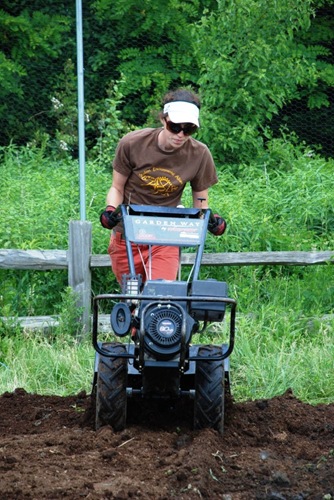
Visiting in June, I got to see the early stages of the season: tilling the soil, weeding, planting….DSC_0533

DSC_0519

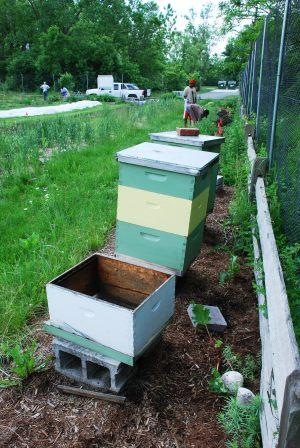
The farm also has a bee colony that participants learn how to tend(in full beekeeper regalia).

DSC_0540

DSC_0550

Overall, I was really impressed by the positive vibe at the farm. People were having a good time, enjoying being outside and working hard together. I could imagine the great experience these young farmers were going to have during the summer, something to be proud of.

Green Youth Farm

Saturday, May 1, 2010

Atwood Community Garden (Madison, WI)

DSC_0260

By now we’ve probably  all heard about the High Line, a park created on an old, elevated railroad line in New York City. Well, NYC wasn’t the first fancy-pants city to turn a train track into a public park. Welcome to Madison, Wisconsin, ya’ll, innovators of the century.

Here the railroad right-of-way got sliced into three ribbons. On the left you can see the long and skinny community garden (woot!); in the middle runs the bike path (woot!); and on the right you can see a graceful swath of native prairie (woot!).

That’s three levels of awesomeness for the price of one.

DSC_0231

At the left-most edge,  community garden plots go right up to the street curb. There isn’t a lot of traffic here, so it works out alright.

DSC_0255

On the other side of the garden, someone has embraced the spirit of the bicycle. A rim for a trellis. Viva la bicicleta!

DSC_0251

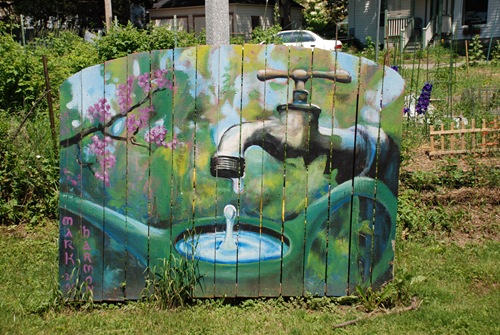
And I suppose this mural is celebrating… water? Anyway, it’s nice. They built a series of walls around the garden, just to put up murals. I might also add that this is the view from a lovely little coffee shop overlooking the garden-bike path-prairie.

Oh Madison. You totally rock.

Atwood Community Garden

Wednesday, April 28, 2010

City Farm (Chicago, IL)

DSC_0572

Check out this totally amazing urban farm in the heart of Chicago. City Farm is actually part of a recycling resource center (offsite). They run at least two farms in the city, selling produce locally and collecting compost materials (plant scraps) from all over the city.

DSC_0599

Here are two of the staffers putting up the last letter of their very cool street sign. This site in Cabrini-Green sits on the edge of a historically poverty-stricken part of the city undergoing gentrification. The farm runs a youth training program and serves as a demonstration site.

DSC_0637

One of the unbelievable things about City Farm is that they have actually moved this farm –soil and all—at least twice. They just scoop up the soil in dump trucks and haul it to their new site.

DSC_0615

Soil is a major issue in Chicago, since most of the land in the city has been contaminated by one thing or another. Rather than building grow boxes to combat the problem, City Farm lays down a layer of clay soil (to adsorb contaminants and keep them from moving upward) then layers their good garden soil on top of that.

DSC_0658

I love City Farm, but not in a weird way.

City Farm

Monday, April 26, 2010

Garden for the Environment (San Francisco, CA)

I’ve been a fan of the work these people do for some time.  Even though I haven’t been personally involved (or even living in the same city!) since I found out about them, I got on their email list a few years ago. I actually read their e-newsletters and look at photos from their workshops sometimes. Does that make me an internet garden stalker? Oh well.


So, here are some photos from the time I actually visited in person with a bunch of cool kids from Davis. Garden for the Environment has all these demonstration features, like the raised beds above. (Note how each one is made from different materials!)

Plus this extra tall one that is extra accessible. The bed is pretty shallow, but you could grow some small things in here, like baby salad greens.

I also love recycled objects in community gardens. Here we have a mosaic wall. There are also a few other recycled features that caught my attention. Love the red sink and the leftover tiles used as mulch:

The garden serves as a classroom, demonstration site and general public garden that’s open dawn-to-dusk. As far as I know, they don’t run any plots for rent, but a lot of the work is done by volunteers and interns.

Overall, the place feels like a hybrid between a grassroots project and a botanical garden, just my cup of tea! I would pretty much love to work here some day.

Garden for the Environment

Wednesday, April 14, 2010

Mill Creek Farm (Philadelphia, PA)

philly1

Like many good things, this urban farm was started by a couple of badass women. Just a few years ago they got permission from the city to build a mini-farm on this vacant lot in West Philadelphia, next to an existing community garden (which is pretty cool).

When I visited in July, they were harvesting like crazy and selling through a farm stand in front of the lot. They were also taking on high school interns and doing all kinds of cool  building/art projects on site.

philly2 philly3 philly4

The last photo above is their newly planted green roof. (That’s sedum, the ever-so-popular plant of choice for green roofs, precisely because it needs almost no water and the thinnest of soil to survive.) Pretty soon, if all goes well, the whole roof will be a carpet of green.

Mill Creek Farm